Monday, March 9, 2009

To Sit With A Tree


By Chris Olson, Outreach Coordinator

The United Church of Christ's website describes Lent as "a season of self-examination, prayer, fasting, and works of love." For Lent this year I am focusing on works of love, specifically towards the environment. I decided to do a personal book study of Women Pioneers for the Environment by Mary Joy Breten. The book profiles 42 women who, through their passion and acts of love, helped start, support, or push forward the conservation movement in the 19th and 20th centuries. Each week I will read a couple chapters and then set time aside for an intentional act of love for the environment based off of the profiles of the women I read about. In her Preface and Introduction, Mary Joy writes "Women's concern for the health of the planet dates back centuries. For example, Hildegard of Bingen (1098-1179), a German nun, writer, artist, and mystic, forewarned about the ecological peril now facing the earth. From the beginning of the more recent environmental movement, women have been the force driving grassroots activism. Women...stepped out of their traditional, subservient roles and created profound changes that help ensure the fundamental right of all living things to a healthy world."

The first chapter, entitled "Tree Huggers and Tree Planters", profiles six women including Amrita Devi, Colleen McCrory, Judi Bari, Harriet Bullitt, Kathryn Fuller, and Wangari Maathai. Luckily for me, Wangari Maathai is one of my environmental heroes so I was incredibly excited to read more about her. In 1977, Maathai started the Green Belt Movement in Kenya, a movement now made up of over sixty thousand women who grow and plant native trees to reforest and rejuvenate the Kenyan countryside. Maathai was the first woman in East or Central Africa to earn a doctorate, become an associate professor at the University of Nairobi, or head a department at the university. From 2003- 2007 she served as Assistant Minister for Environment and Natural Resources in Kenya's ninth parliament. In 2004, Maathai and the Greenbelt Movement were awarded the Nobel Prize.

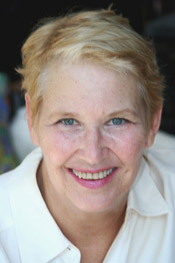
I had the good fortune of meeting Wangari a few years ago (check out the picture!!) and hear her speak about her experiences in Kenya over the past 30 years. She told a story that had a powerful effect on me as a college student trying to figure out how to make a difference in the world, yet seeing the often hopeless headlines and news reports about environmental destruction. I will summarize it for you. There was a beautiful forest that one day caught fire and the fire raged out of control across the land. All the animals in the forest fled to edge and stood watching the flames, feeling overwhelmed. Except one animal, a tiny hummingbird, decided to do something so it flew to the nearest stream, picked up a tiny drop of water in its beak, flew back to the forest, and dropped it over the fire. Back and forth it flew as fast as it could while all the other animals, such as the elephant with much a bigger trunk to carry water, stood watching and discouraging it saying, "What can you do? The fire is too big. Its hopeless." The little hummingbird simply said, "I'm doing the best I can."

Our small (or big) acts of love are the best we can do in the face of a seemingly hopeless situation, but it is our faith in our Creator, our planet, and the millions of acts of love from individuals around the world that fill us with hope and renew our efforts when we feel discouraged. This week I am going to take time to sit in silence, solidarity, and meditation with a tree. Maybe that sounds silly but how often do we take time to simply sit with some of the most amazing life forms in all of creation: living, growing, respirating trees. I'll let you know about my experience next week and in the mean time you can watch a video of Wangari Maathai telling her hummingbird story by clicking on this link or the picture of Wangari and I above.

~Peace~

Thursday, March 5, 2009

Cry for One


By Deanna Matzen

As you may recall, for the last week I have focused my Lenten practice of praying for the environment on praising God for the wonders of creation or praising God's character using nature images. On the praying front, I have to say that the more you praise God, the easier it gets and that's very encouraging and fun. On the practicing front, it's really hard to make time to pray. I've been very tired lately because of a busy home life as we're in the middle of a bathroom makeover and friends going through tough times. But when I make the time it is fruitful.
One of the exercises that was most enjoyable was from the book, Praying with St. Francis, which asked us to write our own Canticle. If you recall, St. Francis wrote Canticle of Brother Sun. Mine does not compare, but I encourage you all to try it if you feel the desire to express your gratitude to God for creation.

This coming week I'm focusing on prayers of confession. In a serendipitous event this morning, I was listening to NPR and the local station's environment reporter was interviewing a photo journalist who is in town to discuss her new book on the Exxon Valdez oil spill. She told the story of one of the photos in her book of a native woman crying. The native woman had asked the journalist if she had seen the dead animals. The journalist nodded. The woman then told how one day she was cleaning a beach and saw a little starfish covered in oil and started crying and couldn't stop until a friend came over and hugged her and said, "Cry for one, and try to save the rest."

It is not uncommon to feel great grief over environmental destruction. That is why I want to spend these weeks praying to God about the environment and lamenting those who have suffered at the hand of environmental sin. I want to confess the ways we've sinned against this world and ask God to forgive us. I want to confess my unforgiveness of environmental destroyers so that I may live in freedom and have the energy to keep trying to save the rest.

To help me focus this week, I decided to "Pray the News." I'm going to take time every day to read environmental news websites and then confess the sins of humanity that I see in those stories and ask God to forgive us all. If you want to engage in praying the news with me, here are some websites to get you started:

I hope you will join with me in evoking the power of God to help us all.

Wednesday, March 4, 2009

We Are The Carriers of Gifts


By Mikaila Gawryn
Outreach Associate

I begin facing North. In this time of Lent I hope to draw closer to God in a number of ways. The first is by practicing a Body Prayer in the mornings. Although a body prayer is not the traditional Lenten practice, I am looking forward to the opportunity to focus on my faith in a new way. I'd like to share two of my reflections on this practice so far.

I first learned this prayer at Holden Village when Earth Ministry staff and members gathered for a week of reflection and learning this past summer. Our Executive Director LeeAnne Beres and Outreach Associate Beth Anderson led a session called "Movement and Prayer" and introduced a number of ways to physically "speak" the prayers of our hearts. The prayer I enjoyed the most mixed words with movement, and included powerful images of engaging with the earth.

The prayer involves facing each of the four cardinal directions (North, South, East and West), and at each direction bending to the earth and in turn lifting my face to the sky. With each direction I speak the following words:

"Now I face the North, bending to gather up the wisdom
and the gifts of the earth,and [standing] offer them to the heavens. [After I let my arms fall to my side, I raise them again saying:] And now I open myself up to the heavens, and I gather all the gifts and the wisdom of the heavens and [stooping low to the ground] I offer them for the fruitfulness of the earth."

Repeating this process in each of the four directions reminds me that as a human being I am simply a carrier of gifts. I can perceive, although only in limited ways, great gifts of God, and I have the opportunity to carry and offer them for the fruitfulness of the earth. I also have the ability to learn from this creation, and can carry the wisdom I gain from it back to the Creator, offering it in praise.

This prayer also gives me the chance to practice receiving, and then letting go of the gifts I am given. It reminds me that holding onto a gift too tightly or for too long can make me depend upon that gift instead of God, the one who gives it. In a year where loss seems all around us I am thankful for the daily opportunity to practice holding gifts lightly and trusting in God's continued provision in a time of change.

As I continue to practice my body prayer throughout Lent I will share more reflections. Perhaps you pray in physical ways too, if so, feel free to share them with us here. If not perhaps Lent is a good time to learn more about engaging your faith physically. Blessings to you on this Lenten journey!

Mikaila

photos of the Alvin Ailey American Dance Company

Tuesday, March 3, 2009

Water: A Lenten Encounter with the Source of Life

Beth Anderson, Outreach Associate


My previous Lenten commitments have always been focused on me, me, me and what I can change in my own life. I gave up buying new shoes. I gave up eating out-of-season produce. I decided to eat a vegan diet.


These individual actions have a clear impact on my personal life and, by extension, the life of the planet. However, this year I feel the need to do something a little less concrete and to learn more about an issue that remains outside my own experience.


For the next six weeks I will be reading the book Troubled Waters: Religion, Ethics, and the Global Water Crisis, by Seattle University professor Gary Chamberlain. As I make my way through the text I will share my insights, learnings, and general musings about water.


I’ll start with this anecdote: I read the first pages of Chamberlain’s book while sitting in a window seat on a Linkbus bound north from downtown Seattle on I-5. After a short break to gaze out at Lake Union and Lake Washington, as the bus passed over the ship canal, I returned to read these words—“I am circumscribed by water.” Indeed! I am inextricably connected to the water of my past, present, and future and it is truly my source of life.


If you’re interested in thinking about the global water crisis as your own Lenten practice, check out Earth Ministry’s NEW website for water-related resources…or simply continue reading my weekly blogs.


Note: My husband and I are also continuing our tradition of eating a vegan diet during Lent, and that practice might occasionally find its way into my blog entries!

Monday, March 2, 2009

Remember You Are Stardust

James in Seattle sent us this beautiful quote in honor of our Lenten Blog:

Remember you are stardust, and to stardust you shall return.
Remember that you are connected, and to connection you return.


What if these words and their meaning are what we take in as we step forward to be signed with ashes? What if, instead of focusing on being nothing, we admit to being someone whose very being is united with all the creativity and goodness and greatness that have ever existed? What if our focus shifts a bit and we claim our identity as human beings made in the image and likeness of God - not merely in an effort to feel good about ourselves, but as a prerequisite for what discipleship really means: living in freedom, carrying on the work of the one we follow, Jesus, the mystery of God wrapped in the mystery of the human? To claim that we are stardust - connected to all that is - having the capacity to recognize the connection, to reflect on and live out of it - will radically alter how we move through this season of Lent. Our fasting will consist of refusing to think of ourselves as too small or insignificant to matter. Our prayer and almsgiving will be informed by the desire to acknowledge and live out of the unity that is at the heart of all creation.

~Judy Cannato, Quantum Grace

Thursday, February 26, 2009

Pray Without Ceasing


By Deanna Matzen, Operations Manager

For Lent, I chose something different from last year. You may recall that in 2008 I chose to give up driving to work. It was a very action-oriented choice though some of the benefits were more time to pray while walking and enjoying nature during my alternative commute. This year I decided to do something more physically passive, but spiritually active. I am going to commit to pray for the environment every day.

I am a big fan of prayer and am involved in prayer ministry at my church. But what I rarely pray for is the environment or the faith-based environmental movement. I firmly believe that as activists, we so often forget about one of our most powerful tools - prayer. I hope that many of you will join me on this journey of prayer.

To make praying for the environment a little easier for myself and for anyone wanting to join me, I have developed a prayer "map." Modeled after a tool I learned in a Lutheran Sunday School growing up, it will aid us in having a balanced prayer life. The mnemonic device is ACTS - adoration, confession, thanksgiving, and supplication. Here is my weekly prayer schedule, I hope you will follow along with me:
  • Feb 25 – Adoration: Praise for God for the aesthetic beauty of creation and use nature images as metaphors for the character of God
  • March 4 – Confession: Confessing on behalf of yourself and God’s people how we have sinned against the earth
  • March 11 – Thanksgiving: Thank God for being forgiven of our sins and all the ways God provides through creation
  • March 18 – Supplication: Pray for Earth Ministry’s work, operations, staff, and board
  • March 25 – Supplication: Pray for justice for creation and people
  • April 1 – Supplication: Pray for God's people to engage in action, advocacy, and acknowledgment of the world's needs
  • April 8 (Holy Week) –Praise & Thanksgiving for the redemption of all creation & for signs of hope

I will also use a few books on prayer to help me through these weeks: Praying with St. Francis, Praying with Julian of Norwich, and The Celtic Book of Daily Prayer, to start.

As of yesterday, I have already begun making time to praise God for creation and using nature images to reflect God's character. The hardest part is staying focused and making the time. But the time I have spent has been sweet. Praising God is hard to do. It doesn't come naturally, so the easiest way I've found to praise God is through song. I attend a church that sings a lot of contemporary Christian music. Here are two of the songs I have been singing, inspired by the Psalms (another great place to find praise for creation and the Creator):

I praise Your Name among the nations
I praise Your Name with all my heart
I join my voice with all creation
Giving You praise for Who You are

And the rocks will not cry out before me
I will ever sing Your praise
Blessings You have poured out on me
Everything, Lord, You gave everything and more

*******

Your love, O Lord, reaches to the heavens
Your faithfulness stretches to the skies
Your righteousness is like the mighty mountains
Your justice flows like the ocean’s tide

I will lift my voice to worship You, my King
I will find my strength in the shadow of Your Wings

Amen

Wednesday, February 25, 2009

Ash Wednesday, Start of the Earth Ministry Lenten Blog!


By Jessie Dye, Program & Outreach Director

Remember, Man, that thou art dust and into dust thou shalt return.

We at Earth Ministry take Lent very seriously. Though from a wide variety of Christian denominations (Roman Catholic, Evangelical, Presbyterian, Lutheran, UCC, Episcopal) the journey and the discipline of Lent is something that means a great deal to each of us. We fling ourselves into fasting and prayer as enthusiastically as partiers in the French Quarter let the good times roll.

It’s not that we are ascetics in general. No one can get into the spirit of a costume party like the staff of Earth Ministry, and we have been known to let loose (most recently at the fabulous cocktail party at the Governor’s Mansion after Environmental Lobby Day). So it‘s not that we are a morose and sober bunch. In fact, we are fun loving and up-beat, and each of us has our share of guilty pleasures.

It’s just that during this long and recently crashed gilded age we’ve just been though when consumption was virtually a household deity, Earth Ministry preached simplicity and sustainability. It’s one thing to enjoy a good party, another to become addicted to endless stuff, be it food, plastic toys, cars or designer jeans. The real addiction we rail against is the mistaking of stuff for the presence of God.

Lent is a natural fit for Christians who wish to live in balance rather than excess. It’s the season when we let go of our own bad habits and feel the pain of saying no to ourselves. In the void left by our fasting comes awareness of our true feelings and needs. Into that empty space comes the possibility of intimacy with ourselves, with each other, and with God.

In making this a fast from our own excess and from environmentally destructive practices, we honor the Creator of this good Earth and the Redeemer whose journey we witness in the six weeks ahead. It’s a small price to pay, given that He whose story we follow in this season gave everything for us.

This year, I’m returning to the Irish Catholic traditions of my childhood. The adults in those years were forbidden to eat between meals, a mandatory fast for all grown-up Catholics; we kids only had to give up candy. And even now, no meat on Friday is still required in Lent. So I’m eating only three meals a day (eating a meal means I’m sitting down!) and a planned snack (again, sitting down at a table). We’ll be vegetarians on Ash Wednesday, for six Fridays, and during Holy Week. No more grazing through the kitchen after dinner, looking for love in all the wrong places. No more Dick’s milkshakes just because I crave one. We are moving down the food chain for six weeks.

I will let you know what I learn as I make the real choice to organize my life around something besides food. It’s a way to practice simplicity each day, like monks observing the hours. The other staff of Earth Ministry will write in this blog on their Lenten experiences as well so remember to check back each day for a new post. It’s a joyful thing to practice the Lenten discipline with a team. And it’s very satisfying to walk our talk!

Wednesday, February 18, 2009

Micah 6:8 - Act, Love, Walk


By Deanna Matzen, Operations Manager

My church is doing a sermon series right now on worship. It's part of a meta-series on the spiritual priorities of our church. A couple of weeks ago, the sermon was on Micah 6:8, "God has shown you what is good. And what does the Lord require of you? To act justly and to love mercy and to walk humbly with your God."

Typically this scripture is used to justify any justice-based ministry and is a key scripture for the faith-based environmental movement. So I listened attentively as my pastor started preaching on this seminal scripture. Would he take it to a place of seeking justice or environmental stewardship? I doubted it, but I paid close attention anyway and here is what I learned:
  • Act justly - Follow the rules and apply them fairly

  • Love mercy - The original Hebrew word for mercy used in this scripture refers to a faithfulness to covenantal relationships

  • Walk humbly - Have a proper perspective on your circumstances

I was moved by the exegesis of this scripture. Speaking of having a proper perspective...this scripture took on such new meaning for me. And now that it's been broken down, let's build it back up into an environmental scripture with more guts.

Follow the rules and apply them fairly

What are the rules for living in this world? What has God called us to do? In the Old Testament, we see commands to let the ground lay fallow once every seven years. We interpret this rule as an instruction for not overusing our resources. The Ten Commandments themselves are a wealth of rules that if we followed them with more intention and thought, we may avoid many environmental issues. "I am the Lord your God and you shall have no other gods before me." Hmmm....how often do we slip by that one? Yet, I believe that many of our social, economic, and environmental ills stem from worshiping false gods...the love of money, individualism, ego, pride, greed... I could go on, but I think you get the point. The New Testament calls on us to love God and to love our neighbors as ourselves. If we were to apply this rule fairly, what would it mean for "the least of these?" Would there be enough food and clean water? Would the oppressed people of this world bear an unfair burden?


Be faithful to covenental relationships

We have a covenantal relationship with God, God has a covenantal relationship with nature (Genesis 9), and many of us have covenantal relationships with other people. We must ask ourselves when we degrade God's creation, are we being faithful to God's covenantal relationship with nature and with humanity? Are we allowing for an abundant life? Are we impeding the flow of grace in this world? Is this an act of love? Am I being faithful to all that God has taught me? If we value other people, then we must value caring for the creation that provides sustenance and life for all of the world.


Have a proper perspective on your circumstances

Humility is one of those paradoxical puzzles in life: if you know you have it, you don't; if you don't know you have it, you probably do. Ultimately a proper perspective means to realize that the world does not revolve around you. I know that I have struggled with perspective, wondering what God's will is for my life and what am I supposed to be doing. That's a very me-centric position, as if I am going to change or save the whole world. As I've aged, my perspective has changed. God's will is for me to be in relationship with God (see the previous two sections). No matter where I am or what I am doing, I must honor my relationship with God and with others through love, respect, honor, and humility. Hopefully these actions will change a part of the world, but I know realize that I am not the center of the universe.

This perspective is useful for environmentalists who see all the world's problems and are overburdened by them. It is a gift to see the need for healing and wholeness and, yes, we are called to act. But at what cost? Do we kill ourselves physically, emotionally and spiritually to save the world? I think God wants us to honor ourselves in that process too. There are things we can do to make a difference, but, like Jesus, we must temper action with rest and prayer, realizing that God holds it all and we have just one little piece. With 6 billion people in the world, I think we can share the burden of saving the world with at least a few other people. Let the grace of God free you to hold only your piece of the pie.

Now hear what the Lord has required of you....to act justly, to love mercy, and to walk humbly with your God.

Tuesday, February 17, 2009

Green Cleaning Toolkit

Beth Anderson, Outreach Associate

Spring cleaning is just around the corner--time to get rid of winter dust and grime and start fresh! Are you looking for safe, non-toxic cleaning products to shine up your spaces?

The National Council of Churches (NCC) recently launched a set of downloadable resources for green cleaning at home and in your church buildings. Cleanliness and Godliness is designed to educate folks about the importance of choosing non-toxic, environmentally-friendly products and to give information about practical alternatives to store-bought cleaners.

The set includes two parts:

#1: Cleanliness and Godliness: A Green Cleaning Toolkit
This section contains recipes for homemade, non-toxic cleaning alternatives and a comprehensive list of ingredients to avoid when purchasing commercial cleaning products.

#2: Cleanliness and Godliness: A Guide for Planning a Green Cleaning Fellowship Event
This guide is a step-by-step resource for hosting a green cleaning activity in your church. Simply follow the suggestions to organize a fun and informative event!


You can find these and many more environmental health resources on the NCC environmental health initiative website. Also, look for opportunities to take further action on environmental health issues in the weekly Earth Ministry e-digest or on our website!


While you're at it, make sure to put the upcoming Toxic Free Legacy Coalition Lobby Day on your calendar: Thursday, March 5, 2009. Advocacy is a great way to put your faith into action--contact Beth at Earth Ministry (beth@earthministry.org) to learn more.

Thursday, February 12, 2009

Recognizing Voices

By Mikaila Gawryn
Outreach Associate

One of my favorite pastimes is listening to the quails outside my parents house in Nevada. Wind pulls sand across the red rock mountains, and if you're quiet these plump little ground dwellers will tiptoe out from behind the rocks and cacti, bobbing their full plumes as if swimming through the hot air. Their cooing makes the silence around them feel even more dense.

I've recently been reminded of how wonderful it is to recognize a friend's voice over the telephone wire, or know immediately who is approaching by the familiar sound of their footfall on the front porch. It occurs to me that with some practice I might learn to recognize my non-human neighbors with a similar familiarity. I've heard this skill described as environmental literacy, and if that is the correct term, than I'd like to learn how to read.

The few neighbors that I've met so far come from northwest Washington (where I grew up) and Nevada, where my parents live now. I've included pictures and sounds from a few of my favorites for you to enjoy. Who's voices or faces in nature do you love the most?


Tuesday, February 10, 2009

Running to the Social Justice Beat


By Chris Olson, Outreach Coordinator

In December, my roommates and I made a pact (well, we pinky swore, which is the most binding agreement in the legal system if you ask me) that we would all work together to put a priority on getting in-shape before the end of our LVC year. We called it our Six Month Six-Pack Challenge. As a result I have been working out regularly for the past month. Two evenings a week in the Loyal Heights Community Center weight room and two or three evenings running around my neighborhood. I've never been one to "work out" but I am finding that it is a great way to relieve stress and feel energized. I can't say that I have seen much of a body result so far, but even if I don't just the fact that I am moving my body and getting off the couch is enough of a reward for me.

One of the issues that has always discouraged me from running in the past is boredom, which would focus my attention on how much I disliked the running. I would be easily defeated. Since January, however, I have been using my MP3 player to listen to music while on my evening run. This has been a fantastic change. I only have two albums on my MP3 that are appropriate for any kind of exercise music (I used to use it while I was studying at the library and haven't updated the "study" music with something more upbeat), one is the John Butler Trio album "Three" and the other is the Caedmon's Call album "Share the Well". Both albums were written around social justice themes.

The John Butler Trio is from Australia and has been advocating against uranium mines in Australia and for the rights of the Aborigine people. Caedmon's Call is a Christian group passionately involved with the Dalit Freedom Network to help the "untouchable" and impoverished Dalit people of India. Since these are the only two uptempo albums on my MP3, every time I run I get a good dose of encouragement about social justice issues. It makes for an uplifting, inspiring, and soul satisfying 45 minutes.

I would like to share the lyrics of one of my favorite songs from Caedmon's Call. Its the title track called "Share the Well". I tried to find it online to post in the blog, but couldn't. You can go to the Caedmon's Call website by clicking on this link or on the picture below and you can listen to to the song there. Enjoy!

"Share the Well"
words and music by Randall Goodgame

Je Ra Ji Ra, Ji Ra, De Ji Ra, De Ji Ji Ji

Share the well, share with your brother
Share the well my friend
It takes a deeper well to love one another
Share the well my friend

Je Ra Ji Ra, Ji Ra, De Ji Ra, De Ji Ji Ji

Do you think the water knows
Flowing down the mountain thaw
Finally to find repose
For any soul who cares to draw
Some kindred keepers of this Earth
On their way to join the flow
Are cast aside and left to thirst
Tell me know it is not so

Share the well, share with your brother
Share the well my friend
It takes a deeper well to love one another
Share the well my friend

All God’s creatures share the water hole
The blessed day the monsoon comes
And in His image we are woven
Every likeness every one
From Kashmir to Karala
Under every banyan tree
Mothers for their children cry
With empty jar and bended knee

Share the well, share with your brother
Share the well my friend
It takes a deeper well to love one another
Share the well my friend

Je Ra Ji Ra, Ji Ra, De Ji Ra, De Ji Ji Ji

You know I’ve heard good people say
There’s nothing I can do
That’s half a world away
Well maybe you’ve got money
Maybe you’ve got time
Maybe you’ve got the Living Well
That ain’t every running dry

Share the well, share with your brother
Share the well my friend
It takes a deeper well to love one another
Share the well my friend

Share the well, share with your brother
Share the well my friend
It takes a deeper well to love one another
Share the well my friend

Je Ra Ji Ra, Ji Ra, De Ji Ra, De Ji Ji Ji

Thursday, February 5, 2009

An Organic Valentine's Day


by Deanna Matzen

This week, The Rev. Canon Sally G. Bingham (the founder and president of Interfaith Power & Light) announced the release of a new book titled, "Love God, Heal Earth". Can we say it more simply than that? Isn't that the basic gist of all the work we do? If you love God, you will treat the earth with love, which means actions which are healing, not destructive.

As Valentine's Day approaches, I can't help but see the holiday in a new way. As a day of romantic and love-filled expression, does our love heal? Specifically, does the mass purchasing of flowers during a time of the year when our gardens are dormant make sense ecologically? Are we healing the earth when we buy flowers from greenhouses and foreign countries to express our love? If only Valentine's Day were a couple months later, then we could pick bouquets from our gardens.

Here are a few "fun" facts about American Valentine's Day consumerism:
  • 180 million cards will be exchanged (not including kids)
  • 73% of men buy flowers on V. Day
  • 15% of women buy themselves flowers
  • $1.1 billion were spent on candy

Given the economic downturn, many people are choosing to downscale Valentine's Day. What a better time to rethink how we express our love. Here are some thoughts on ways to make Valentine's Day a way to love one another and heal the earth:

  • If you buy flowers, buy organic or from a local farmer's market- There are no rules regulating pesticide use with flowers and many growers suffer health problems from pesticide exposure, working long hours, and bad working conditions.
  • Give fair-trade, organic chocolate
  • Cook a meal at home with local food and wine
  • Buy a recycled card or make one out of reused paper
  • Make a gift like homemade cookies and package in recycled materials
  • Spend the day outside remembering why you work so hard to love God and work to heal the earth

Have a happy and healthy Valentine's Day! From your Valentine, Earth Ministry

Friday, January 30, 2009

Setting Goals: My Environmental Manifesto


By Mikaila Gawryn
Earth Ministry Outreach Associate

"Learn about mangrove swamps -- shrimp." These words were scrawled across the page in bright orange pencil. Various other random statements swam in my mind as I sat on the wood floor. Dust particles swirled heavily in the lemon colored light of early summer, and I looked out across the mess of a bedroom that I had grown up in. Old t-shirts and a boom box lay slumped atop an uneven pile of papers. I was packing for the move my parents were making to Nevada.

After my first year of college, a year full of studying environmental issues (read: lots of talking, little doing) the need to take personal action had hit a souring pitch. Inconveniently, the height of my restlessness arrived at the exact moment I had to clean out my old bedroom. So of course, I didn't clean. Instead, I began writing.

I wrote in big letters, fast and unwieldy scribbles, simply to express the hunger for what felt like my first environmental manifesto: "Become comfortable with public transportation. Try eating less meat. Learn about mangrove swamps -- shrimp. Does sustainable sushi even exist?" The list went on.

I knew what I wanted to do. I wanted to live differently. It felt electrifying.

As the daylight hours sifted into evening I continued to ignore my room until finally I had filled the page . . . my manifesto. Fighting the urge to book a flight to Germany and nail my announcement to a door, I surveyed my work. I knew what I wanted to do, I wanted to live differently. It felt electrifying.

Since writing this first manifesto I have had the opportunity to check off a number of items from the list. I was given the opportunity to study the impact of the sushi industry on Blue Fin tuna populations. I have taken the Seattle metro in snow, rain and even sun. I have also not completed many of my goals. Calling my legislator on a weekly basis has never come easily, but I'm still working on it. (This angry leaf suggest calling your legislator too.)

Over time I have written more manifestos. Added to my lists have been less tangible items, such as "Don't try to be perfect" and "Seek sources of empowerment." Other ideas, like making that phone call, stay on the list.

A mentor of mine once said that there is power in writing down a goal, tacking it to the wall and simply looking at it every day. He said that this helps him to keep his objective clear in mind. Have you ever created an environmental manifesto of your own, or perhaps a justice manifesto or a peace manifesto? What are you passionate about? Write it down and tape it to your wall. Keep it around and in time rewrite it if you need to. If you haven't ever done this I encourage you to consider it. And who knows? Maybe your manifesto will start a revolution.

Tuesday, January 27, 2009

A Green Thumb on the White House lawn


By Chris Olson, Outreach Coordinator

In early October of last year, as the Presidential election was entering is final and most heated stage, Michael Pollen, organic food advocate and author of "The Omnivore's Dilemma" and "In Defense of Food: An Eater's Manifesto", wrote an article for The New York Times Magazine. The article was a letter to the soon to be elected President, whichever candidate that was to be, about the state of our American food system. He gave a number of policy suggestions on ways to move our nation's focus away from corporate, global agribusiness and instead towards healthy, local community farms. His last suggestion in his list was to create the position of White House farmer, much like the White House chef.
"Finally, there is the power of the example you set in the White House," Pollan writes, "If what’s needed is a change of culture in America’s thinking about food, then how America’s first household organizes its eating will set the national tone, focusing the light of public attention on the issue and communicating a simple set of values that can guide Americans toward sun-based foods and away from eating oil... Since enhancing the prestige of farming as an occupation is critical to developing the sun-based regional agriculture we need, the White House should appoint, in addition to a White House chef, a White House farmer. This new post would be charged with implementing what could turn out to be your most symbolically resonant step in building a new American food culture. And that is this: tear out five prime south-facing acres of the White House lawn and plant in their place an organic fruit and vegetable garden."
He goes on to describe how Eleanor Roosevelt's example helped create the Victory Garden movement in 1943, which ended up contributing nearly 40 percent of the nations food during the WWII. That's incredible. People from around the nation agreed with Pollan's suggested change and a website, www.whitehousefarmer.com, was created to help spur the movement. Seventy five farmers from 23 states and the District of Columbia have been nominated in the past few months and anyone who visits the website can read their biographies and vote for who they would like to be the first White House Farmer.

As of today, the leading contenders are Carrie Anne Little and Claire Strader. During my time at the University of Wisonsin-Madison, I did a project where I had to work on an organic farm for a day (I think I even wrote about that experience in my first blog post!). The farm I worked on was Troy Gardens Community Farm and Claire was the farmer who worked with us all day, planting potatoes, picking invasive mustard plants, and giving us a tour of the grounds. I voted for her because of my personal experience working with her. That being said, the other leading nominee is Carrie and she is from Washington state. I don't know her personally but I bet she is a wonderful farmer as well. A number of both Wisconsin and Washington farmers have been nominated. Whether or not you vote for anyone, you should at least check out the website (www.whitehousefarmer.com) and see if you know any of those nominated or read Michael Pollan's article. Hopefully in the coming months we will hear news from DC about the new farmer reshaping the White House lawn!

Wednesday, January 21, 2009

Theology & Nature


By Deanna Matzen, Operations Manager

I have been reading for the last couple of years a book by Philip Yancey entitled, "Soul Survivor: How Thirteen Unlikely Mentors Helped My Faith Survive the Church". I remember reading with delight that Annie Dillard, a Christian nature writer and Pulitzer Prize winner was included. I wanted to read that chapter first but I restrained myself starting at the beginning where there were many other wonderful profiles. But a few weeks ago I cracked and I decided to jump ahead and I want to share some reflections on what I read. But first, an excerpt from Yancey’s book:

"Dillard acknowledges the world as the Creator’s work and then considers the consequences. What joke is this Creator playing on us? she asks…what lesson can we draw from such a work? The problem, as always, is that nature gives off mixed signals. Like the unruly child, the natural world both reveals and obscures God; creation groans, to use apostle Paul’s term….She says, ‘I alternate between thinking of the planet as home – dear and familiar stone heart and garden – and as a hard land of exile in which we are all sojourners.’ God must prefer working with one hand tied behind his back, she concludes.”

Yancey goes on to describe how Dillard’s writings are punctuated with images of contradiction, that in the midst of describing the beauty of nature, the horror of nature is not far behind - like the illness that claimed her brother-in-law’s life ("Pilgrim at Tinker Creek") or a tragic plane accident ("Holy the Firm"). He then recalls a conversation he had with Dillard about these matters.

"We discussed C.S. Lewis’s notion that we must not go to nature to construct theology; she will fail us every time. Rather we go to nature once we have our theology and let her fill the words – awe, glory, beauty, terror – with meaning. ‘I like that,’ she said. ‘But you see, I’m trained as a literary critic, and I approach the whole chaos of nature as if it were God’s book. For many of my readers, that’s the only book of God they will read. I must start there.’”
After reading those words, I spent some time with the questions: Do we create our theology and then take it to nature? Or do we draw our theology from nature?

These are not new questions to me as I have pondered the connections between faith and caring for the environment for many years. But this time I had clarity. It is not either/or. It is both. It reminds me of the story of the four blind people who feel an elephant and describe it as “trunk-like,” “ear-like,” “leg-like,” or “tail-like,” each is describing a part of the whole, holding a piece of truth. In the same way, I believe that every denomination, every theology holds a piece of the truth of God and if we put it all together we have more of the truth, but God is ultimately still a mystery.

Let us not hold too tightly to our dogma as the one and only truth. Nor hold too tightly to one characteristic about nature and say that it is the most representative characteristic of God. There is benefit in starting from nature to inform theology and in forming theology and enriching it with examples from nature. We gain something unique in both exercises and we create a more complex picture of God. A song sung with one line of music or one voice is much less rich and invigorating than a song sung with four lines of music by room full of people melded in perfect harmony.
"Plunge into matter by means of all created things, without exception, the divine assails us, penetrates us, and molds us. We imagine it as a distant and inaccessible, whereas in fact we live steeped in its burning layers." ~Teilhard de Chardin

Tuesday, January 20, 2009

Safe Baby Bottle Act

Beth Anderson, Outreach Associate

After successfully passing the Children’s Safe Products Act during the 2008 legislative session, Washington’s environmental health community is now backing legislation to ban bisphenol-A (BPA) in baby bottles & children’s food containers.

BPA is a chemical that was originally developed as a synthetic form of estrogen. It is now used in a variety of industrial applications, most commonly as an additive to harden plastic and in the epoxy resin which lines many canned food containers.

Because of the prevalence of BPA in our lives,“Testing in 2007 by the Centers for Disease Control (CDC) found 93 percent of Americans age 6 and up were exposed to BPA. Children in the study had the highest levels of BPA, followed by teens and adults.”[1]

Companies like Nalgene (maker of the ubiquitous plastic sport bottles) and Playtex (a large distributor of baby bottles) have already made the switch to BPA-free alternative materials. Last year the Canadian government banned BPA in baby bottles, and some European nations are considering BPA bans, as well. Click here for a list of safer BPA-free baby bottles.

However, not all people have the means to locate and purchase safer alternatives, and in some cases BPA-free products are not available. As people of faith, we are called to give voice to the voiceless and protect the most vulnerable members of our community.

I urge you to contact your state legislators in support of the Safe Baby Bottle Act. The phone number for the legislative hotline is 1-800-562-6000, or you can contact your legislators via e-mail (addresses can be found using the “Find Your Legislator” tool on www.leg.wa.gov). Remember to let them know that you are advocating for this legislation on behalf of the faith community!

[1] Safe Baby Bottle Act of 2009 Fact Sheet, published by the Toxic-Free Legacy Coalition.

Thursday, January 15, 2009

Avoid Toxics in the New Year


Mikaila Gawryn
Outreach Associate

You may wonder what exactly an outreach associate does. This Outreach Associate is involved in editing and expanding Earth Ministry publications. That basically means I spend a lot of time researching various topics, and then writing and compiling information about those topics for our Caring for All Creation booklet series. Most recently I have been researching toxics and environmental health and I would like to take this opportunity to share some of what I've learned about the toxins found in our homes. One of the most pervasive sources of dangerous toxins in our homes is vinyl. First, here is a quick explanation of the concerns associated with this product.

Vinyl, also known as PVC plastic, is used in many household products such as furniture, siding, shower curtains, and even carpets. Poisonous chemicals called dioxins are released during the production and use of vinyl and particularly in its incineration. The Washington Toxics Coalition (WTC) reports: "Dioxins pose a serious public health threat. They are known to cause cancer in humans and are among the most powerful carcinogens known. They also cause a whole range of other health effects on the reproductive, endocrine, and immune systems." The good news is that there are many inexpensive and easy ways to reduce the vinyl products in your home and community, thereby reducing your exposure to these harmful chemicals.

Below are five easy ways to avoid using vinyl in your home and to reduce the introduction of dioxins in our environment.
1. Shower Curtain: Switch from a vinyl shower curtain to a cotton curtain with a nylon or polyester liner.

2. Window coverings: Next time you need new blinds or window covers, consider choosing a natural fiber or material, such as bamboo, cotton or wood.

3. Outdoor Furniture: Look for non-plastic outdoor furniture whenever possible. Many outdoor items can be purchased in metal or wood. The Washington Toxics Coalition also suggests ask sales associates for products that are made with recycled rather than virgin plastics.

4. Plastic Containers: Plastic containers with the number 3 inside the recycling symbol are made with PVC plastic and should be avoided. Make sure to look on your personal care products, such as shampoo, to see if your company uses PVC. If they do, write them an email or call asking them to give up the poison. Never microwave plastics or plastic wrap of any kind.

5. Take Action:
Join the Center for Health, Environment & Justice in their campaign against PVC plastics. Find out about the newest updates on PVC use and manufacturing. Tell a friend about how to avoid PVC plastics and watch the informative and fun video Sam Suds and the Case of PVC, The Poison Plastic.

Sources:
Center for Health, Environment & Justice
Eliminating PVC in Your Home Washington Toxics Coalition

Tuesday, January 13, 2009

Getting Our Priorities Straight


By Chris Olson, Outreach Coordinator

On Sunday afternoon my roommate and I strolled through the Ballard Farmers Market on our way down to the Hiram M. Chittenden Locks. After five months of living in Ballard, we decided it was high time to check out this local attraction. We arrived at the perfect time to see both a large ship and a number of smaller boats pass through. Growing up in Wisconsin I was only a few hours from the Mississippi and had seen lock and dam systems before. It was fun explaining what was happening to my roommate though, as she had never encountered locks in Colorado. Moving over the dam itself, we made our way to the fish ladder and into the viewing chamber below the water level. If you haven't been down there I would definitely suggest it. Although we didn't see any salmon moving up the ladder, we could imagine hundreds of fish fighting their way against the current to get to the calm water above.

While we were reading the educational displays throughout the room, an automated tour guide began telling us all about the locks and how the fish ladder works to protect four salmon species. The guide also explained about the technological improvements that have been added to the impressive facility for the safety of the fish. I have to say I was quite enjoying myself. But then the automated guide lost me. He mentioned that there was a growing effort to protect the decreasing numbers of smolt from sea lions that wait at the bottom of the dam in the spring. While I admit I don't know much about the plight of the salmon or the conservation efforts surrounding them, this just didn't make any sense to me. I went home and did some research and found out that there were problems in the past with sea lions camping out at the base of the locks to eat the salmon that passed through. The whole experience got me thinking about the increasing multitude of hazards facing the salmon each year.

One of the 2009 Environmental Priorities in Washington is the Invest in Clean Water initiative. I wholeheartedly believe that this is the type of legislation that will help protect the future of the wild salmon in the Pacific Northwest.
2009 Environmental Priority: Invest in Clean Water
A polluter-pays fee levied directly on oil companies would fund critical water quality projects across the state. Oil companies should pay their fair share to clean up and prevent the pollution caused by their products. The fee would be based upon the quantity of petroleum products possessed by companies in Washington.This bill would raise over $100 million dollars every year for clean water, new jobs and healthier communities across the state. From the Spokane River to Puget Sound, it will fund the creation of new clean water infrastructure. By raising money directly from the polluting industry, the bill will provide financial relief to local governments and cash-strapped taxpayers who would otherwise be stuck footing the bill for these critical water quality projects.
We are at a point in our planet's history when we must examine, diagnose, and take action on the roots of our environmental problems. Sea lions may have some impact on the salmon population but increasingly across the region pollution, contamination from erosion, and habitat destruction are wreaking havoc on our native wildlife. Supporting the Invest in Clean Water priority is one way that we can take a proactive step toward ensuring that Washington's waters and waterways are a healthy place for generations of salmon to come. For an easy way to tell your legislators that you support the Invest in Clean Water priority and that they should too, please call the Legislative Hotline at 1-800-562-6000. Also, remember to join us in Olympia on February 19th for Environmental Lobby Day and March 17th for Faith Advocacy Day. Hope to see you there!

Wednesday, December 31, 2008

I'm Just A Bill


By Chris Olson, Outreach Coordinator

Mikaila did a great job of laying out the four Environmental Priorities for 2009. I am excited to be a part of Earth Ministry's advocacy efforts this year, but I still have a lot to learn about the legislative process. I would like to run through a quick step-by-step of how a bill becomes a law in an effort to educate myself and remind others of the process as well. Some of you may have fond memories of the old School House Rock video "I'm Just a Bill" which also walked through these steps in a more musical fashion. Click on the picture of "Bill" or this link to watch the video of this TV classic.

I compiled the information here from two publications created by the Washington State Legislature's office.

How A Bill Becomes A Law
  1. A bill may be introduced in either the Senate or House of Representatives. The procedure by which a bill becomes a law is much the same, wherever the bill originates. For our purposes, we will say the bill was introduced in the Senate.
  2. A committee studies the bill and often holds public hearings on it. The committee will then meet to consider the information it has gathered.
  3. The committee is now ready to report back to the Senate. If the majority is in favor of the bill the chairman recommends the bill for passage. The committee report is read in open session of the Senate, and the bill is then referred to the Rules Committee.
  4. The Rules Committee can either place the bill on the second reading calendar for debate before the entire body, or take no action.
  5. At the second reading a bill is subject to debate and amendment before being placed on the third reading calendar for final passage. Depending upon the degree of controversy, debate may last a few minutes to several hours--or even several days.
  6. After passing in the Senate, the bill will go through an almost identical procedure in the House.
  7. If the bill is passed by the house, but is amended, the Senate must concur in the amendments.
  8. When the bill is accepted in both houses, it is signed by the respective leaders and sent to the Governor.
  9. The Governor signs the bill into law or may veto all or part of it. The Legislature can override the veto by a two-thirds vote of both houses. That's how a bill becomes a law!
We hope to see all of you at the Legislative Workshop on January 10th, Environmental Lobby Day on February 19th, and Faith Advocacy Day on March 17th. For more information about these three critically important days please visit Earth Ministry's website www.earthministry.org.

Happy 2009!

Wednesday, December 24, 2008

Merry Christmas from Earth Ministry

by LeeAnne Beres

For the past week and a half, Seattle has been covered in a blanket of white. This is the longest stretch of snow that I can remember in eighteen years of living here, and I have to admit I like it. Seattle is woefully unprepared for this much snow, and much of the city has ground to a halt.
Instead of fighting it, I embrace it.

The snow has forced us all to stop, to pause in the mad dash up to Christmas. Streets in my hilly neighborhood are impassable and bus lines are disrupted. All of my carefully laid plans of the last week have also been disrupted. Last minute shopping, several social gatherings, and even my mother’s planned visit over the holidays have all fallen by the wayside due to the inclement weather.

Yet there are blessings to discover in the snow that uncover the true meaning of Christmas. Streets closed to cars mean that I’ve seen more people out walking in my neighborhood this week than during the sunny month of July. People are pulling together and looking out for one another. The sense of community is palpable – friends are loaning snow shovels, neighbors are checking in on seniors, parents are watching kids sled down closed streets, and strangers are helping to push cars stuck in the snow.

It is this sense of community that lies at the heart of Christmas and reminds us that people, not presents, are what really matter. As we prepare to celebrate Christ’s birth, we also remember His last command to the disciples – to love one another. We may not always be called to do so in ways we expect. I expected to spend the week with close friends and family, but instead I’ve grown closer to my neighbors and have shared Christ’s love with strangers. What a wonderful Christmas gift.

From all of us at Earth Ministry, I wish you a joyful and blessed Christmas. May you rejoice in the light and love of Christ within you and share it freely with others.

Merry Christmas!